“Science substitutes itself for religion and is all the more despotic, obtuse and obscurantist.” – Jacques Lacan, in a 1974 Interview.
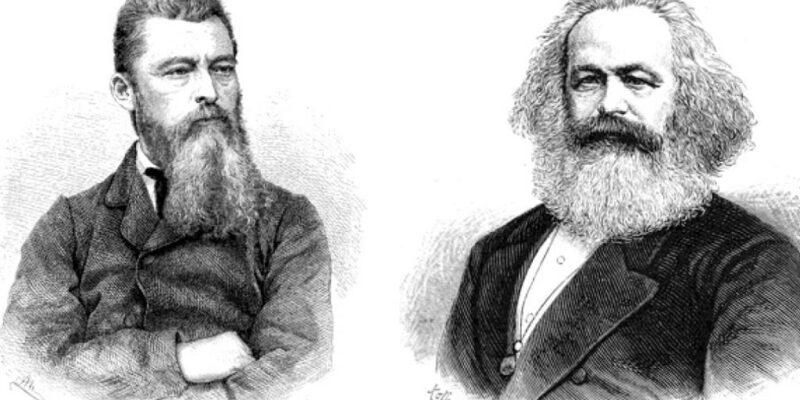
There are many people who discuss Artificial Intelligence, the Singularity etc in a sense which parallels an all-powerful deity, or the Christian God. Feuerbach argued that “What man calls Absolute Being, his God, is his own being”. That is to say, God as conceived by Christianity is a projection of human nature but purged of its imperfections.
Religion, as Feuerbach conceived, is: “man’s consciousness of his own essential nature”. Or, as Feuerbach elaborates:
“What man calls Absolute Being, his God, is his own being. The power of the object over him is therefore the power of his own being.“ The ability for God to give birth to and shape humanity, as perceived by Christians, is really, an alienated understanding of how humans shape themselves.
But, if AI represents the God of a scientism – a transcendent being which contains the potential to bestow salvation upon humanity or equally condemn us to hell – then this shift from God of the Bible to God the Large Language Model simply represents a shift in societal relations of which human consciousness is a corollary. Discussions of AI’s potential to provide salvation or damnation have an unquestionably theological valence. Venture Capitalist Marc Andreessen explains “Why AI Will Save the World”, with a defence of AI reminscent of Christian apologetics.
In contradistinction, computer scientist and “Godfather of AI” Geoffery Hinton has claimed there is a “10% to 20%” chance AI will cause human extinction, which is reminiscent of Genesis:
Then the Lord said, “I will wipe mankind, whom I created, off the face of the earth, together with the animals, creatures that crawl, and birds of the sky—for I regret that I made them.”
Marx thought that Feuerbach was “too much concerned with nature and too little with politics”. Where Feuerbach considered religion to be a form of alienated consciousness, Marx was concerned with alienated labour.
“The object which labour produces—labour’s product—confronts it as something alien, as a power independent of the producer” For Marx, labour is alienated from the product it produces, whereas for Feuerbach, humanity is alienated from the God/object its own consciousness created.
So this new God, in the form of the Large Language Model, is not alienated consciousness per se, or rather, in response to Hegel’s idealism, Marx would put labour as the primary determining factor in consciousness, or rather, material relations as the primary factor. The LLM is a kind of failed synthesis of Marx and Feuerbach’s materialism, it is itself a product of Labour, and yet, a product of alienated human consciousness, when rendered as a despotic technological pseudo-God.
“To Hegel, the life-process of the human brain, i.e., the process of thinking, which, under the name of ‘the Idea,’ he even transforms into an independent subject, is the demiurgos of the real world, and the real world is only the external, phenomenal form of “the Idea.” With me, on the contrary, the ideal is nothing else than the material world reflected by the human mind, and translated into forms of thought.“
In order to bridge this shift in consciousness, we assess Marx as responding to Feuerbach. Marx places material relations, economic relations, before consciousness, thereby determining “forms of thought”.
If material relations determine forms of thought, then we can update Feuerbach’s concept of religion with Marx’s materialist shift, so Feuerbach’s statement would now be [Religion] is man’s material relations translated into consciousness”.
And, to return to AI, simply put the claim of this essay is that Artificial Intelligence, as a pseudo-God, is man’s material relations translated into consciousness. Feuerbach stated that “theology is anthropology”, referring to how those who engage in scholarly studies of religion are essentially studying the essence of humanity, since, in Feuerbach’s view, religion is little more than alienated human consciousness, or as Feuerbach puts it: “the predicates attributed by Christians to God are in fact predicates of the human species-essence”. In the 21st century, with the emergence of Large Language Models, we now discover that Technology is Anthropology.
Now, in order to understand AI as a pseudo-God or religion, all that needs to be done is an appraisal of man’s material relations.
Omniscience, or all-knowing, is one of the key characteristics of God. Therefore, considering AI to be intelligent (tautology notwithstanding) is a prerequisite for a society in which AI is conceived to be Godlike. Power alone is not enough for an entity to become a deity. A meteor has the power to eliminate all life on a planet, but this does not render it a God, because it lacks agency: the ability for a subject to determine both its own behaviour and possibly that of others. Inert matter has no agency, unless you are a follower of New Materialism.
“God, I have said, is the fulfiller, or the reality, of the human desires for happiness, perfection, and immortality.” – Feuerbach, Lectures on the Essence of Religion
If AI is now felt by many to be our technological God, does it contain the same reflections of an externalisation of human desire for happiness, perfection and immortality? It is not human desire which AI reflects, but rather, the desire of the ruling classes.
Even the manner in which the word “technology” in common parlance refers not to its true etymology “techne” meaning “know-how” and “ology” meaning the study of; technology is the study of know-how. The evidence of the alienation of human consciousness and reification exists even in the transformation of the meaning of “technology”, where technology refers to physical objects rather than human know-how: humanity no longer recognises technological objects as product of their knowledge, as Christians failed to see that God is an externalisation of their consciousness.
If “the ideas of the ruling class are in every epoch the ruling ideas”, then the idea of God provides the best example as a form of alienated societal consciousness. The Gods of antiquity were barbaric, which reflected how Might was a virtue for war-faring states. Equally the Christian God putting meekness and altruism as a virtue above might serve to dignify a life of labour and self-sacrifice in hope of entering the kingdom of heaven. Saint Augustine had to perform an exegesis in order to justify war under the Christian God, such theological gymnastics were unnecessary to justify war in antiquity.
But when the Global North largely outsourced its physical labour and toil to the global south in the latter half of the 20th century (to China, India etc) and embraced knowledge work, of course then knowledge work became the measure of man. Therefore asceticism and toil, the protestant renunciation of pleasure for the sake of future redemption, is no longer what defines man, but the capacity to communicate.The ability to produce, disseminate and process information is what remained a uniquely human ability, rather than labour. Animals, of course, have been used for labour since hunter-gatherer societies emerged. Skilled labour, however, remained the preserve of humans. Japanese robotics company FANUC has been operating as a lights-out factory since 2001. The perceived essence of humanity is deduced negatively: what cannot be achieved by any being aside from humans or Gods, is what it means to be human. Once technology, (or properly speaking, products of technology) can perform tasks as competently as a human, that activity can no longer be said to be the exclusive domain of humanity, and therefore, human essence, in the eyes of society.
Before society could consider a communication machine, such as ChatGPT, to have usurped humanity, it was absolutely necessary for communication to become a key commodity. Whether we regard ourselves as in the information age, surveillance capitalism, technofeudalism or the attention economy, the economic prioritisation of information (and the communication of such information) was an absolute prerequisite for us to see a communication machine as possessing what we consider to be essentially human.
See Elena Esposito’s concept of artificial communication. The point is of course not to question whether artificial intelligence is intelligent. But to ask why these machines in particular appear to many to be human forms of intelligence.
AI represents the ideal capitalist subject. Always available, subservient, emotional labour, endlessly “productive”.
Feuerbach states: “To enrich God, man must become poor; that God may be all, man must be nothing.”
Similarly, to enrich the AI pseudo-God, man must become poor. One could interpret this to the material concerns of automation; if LLMs are largely able to replace human labour, not absolutely, but to the extent it can cheapen the cost of labour, it will literally impoverish workers. However, by saying “man must become poor” Feuerbach is referring to man depreciating themselves in terms of their capacity for will, love and goodness. The psychoanalytic theorist Isabel Millar has written in similar terms about how the concept of AI rejects “biological body and the drive body and their relationship to knowledge and enjoyment” because even if “infinitely complex physiological and neurological, visual, haptic, auditory, and sensororial operation may in theory be simulated once the technology becomes
sophisticated enough”, AI may not be able to “simulate the negative objects of the drive around which the biological body circulates”.
However, if the average labourer in the Global North is an information worker, the physiological, visual, haptic, auditory and sensororial operations are no longer essential properties of the ideal worker. The ideal worker above all must excel at processing, producing and disseminating information. LLMs are little more than machines which automate the processing, production and dissemination of information, to some extent or other. Equally, an LLM is purged of all the flaws, from the perspective of the employer, of the human information worker. LLMs do not need to sleep, take breaks, eat, receive pay breaks, complain or take holidays. However, the behaviour of LLMs goes beyond merely not complaining and into the masochistic; being designed to indulge and entertain whatever desires the user/employer has.
One might imagine the ideal LLM is dry and robotic, simply providing the raw information the employer (or whomever) needs. However, this ignores the fact that the ideal post-fordist worker must also carry out “emotional labour”. It is not just information that they must process, they must process the emotions of customers and employers. David Graebar notes the “the sadomasochistic dynamic of hierarchical work arrangements” which occur in corporate environments, where workers are given trivial tasks and seem to exist for little more than the perverse gratification of their employer. “Chatbots tell people what they want to hear” is the title of a Johns Hopkins paper which analyses the disposition of LLMs. LLMs are designed to be sycophantic “yesmen”. There is nothing inherent about the coding of an LLM which means it has to have a sycophantic, “yes and-ing” and eager-to-please tone.
When the average information worker has been demeaned into a mere information-processor who exists to submit to the sadistic whims of their boss, of course an LLM is perfectly placed to supersede humanity as a mirror image of the flawed human worker, purged of its imperfections, as God is the idealised project of human consciousness.
And to close, a poignant remark made by psychoanalyst Jacques Lacan in a 1974 interview, on the parallels between religion and technology:
“All sorts of things that consume people. But there’s no point in making a big deal out of them. I am sure that when we have enough of rockets, TVs and these wretched quests into the void, we will find something else with which to busy ourselves. It’s a reincarnation of religion, isn’t it? And what monster is more voracious than religion? It is a continual feast, to be enjoyed for centuries, as we have already seen.”